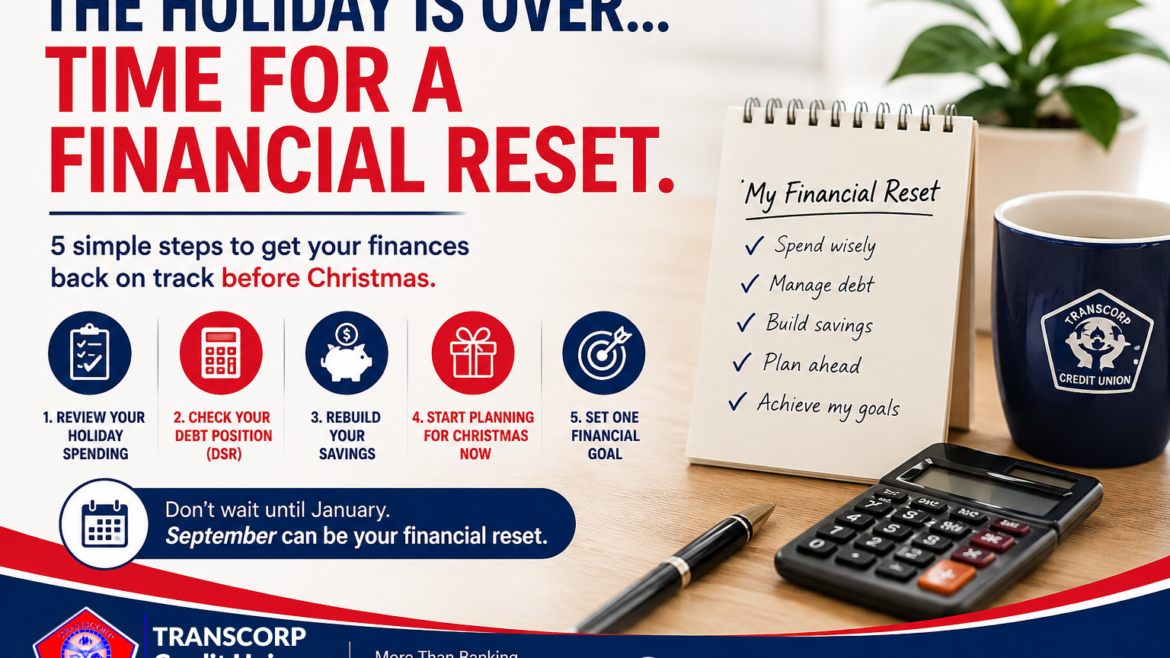
The vacation period may be behind us, but for many households, the financial effects can linger a little longer. Here are five practical steps to help get your finances back on track before the end of the year.
The July/August holiday period is often one of the busiest—and most expensive—times of the year.
Between family outings, vacations, entertainment, back-to-school preparation and the everyday expenses that never seem to take a holiday, it is easy for spending to increase more than expected.
Now September is here. The children are heading back to school, routines are returning to normal, and Christmas is already appearing on the horizon.
But before moving into another season of spending, this may be the perfect opportunity to ask yourself:
How are my finances doing?
You don’t have to wait until January to make a fresh start. September can be your financial reset.
Here are five simple steps to help you get started.
1. Take an Honest Look at Your Holiday Spending
The first step is simply knowing where you stand.
Take some time to review your spending over the past two months. Look at your bank accounts, credit card balances, loan payments and other financial commitments.
Did you spend more than planned? Did you use savings that now need to be replenished? Did additional expenses end up on a credit card?
This isn’t about regretting the holiday. It’s about understanding your current financial position so that you can make better decisions for the months ahead.
Financial planning begins with knowing your numbers.
2. Check Your Current Debt Position
Your salary alone doesn’t determine how financially comfortable you are. What matters just as much is how much of that income is already committed to debt.
This is where your Debt Service Ratio (DSR) becomes important.
If several loan and credit payments are competing for your income each month, adding another financial commitment could place additional pressure on your budget.
Before borrowing again, take a look at what you’re already paying and ask:
How much of my monthly income is actually available after my financial commitments are met?
Understanding your DSR can help you make more informed borrowing decisions and identify whether reducing existing debt should become a priority.
3. Start Rebuilding Your Savings
If your savings took a hit during the holiday period, don’t become discouraged.
You don’t have to replace everything immediately.
Start again with an amount that is realistic and sustainable. The important thing is rebuilding the habit.
Consider setting an automatic transfer to your savings or Credit Union shares whenever you receive your salary. Even a modest amount contributed consistently can make a meaningful difference over time.
Think of it this way:
Don’t only save what’s left after spending. Make saving part of the plan from the beginning.
4. Christmas Is Coming — Start Planning Now
It may feel early, but Christmas is only a few months away.
Gifts, groceries, family gatherings, travel, entertainment and other seasonal expenses can quickly add up. Waiting until December to think about these costs can place unnecessary pressure on your finances.
Start planning now.
Decide what you can realistically afford to spend and begin putting aside a little toward that amount each month.
If you start in September, even small contributions over the next few months can reduce the amount you need to find all at once in December.
A little planning today can help prevent a financial headache in January.
5. Choose One Financial Goal Before the Year Ends
You don’t need ten financial resolutions.
Choose one meaningful goal that you would like to accomplish before the end of 2026.
It could be:
- Paying down a credit card or another debt;
- Increasing your Credit Union shares;
- Rebuilding your emergency savings;
- Starting a dedicated Christmas fund;
- Reviewing your household budget; or
- Beginning to save toward a larger 2027 goal.
Make the goal specific and realistic.
Instead of saying, “I need to save more,” decide how much you want to save and how much you will contribute each payday.
Small, consistent actions are often more powerful than ambitious plans that are difficult to maintain.
Don’t Wait Until January
A financial reset doesn’t require a new year.
September gives you an opportunity to review what has happened, make adjustments and approach the final months of 2026 with greater confidence.
And remember, your Credit Union is about more than providing access to loans.
At Transcorp Credit Union, we want our members to make informed financial decisions, build healthy savings habits, manage debt responsibly and work toward the goals that matter to them and their families.
So, as the holiday period ends and normal routines return, take a little time to check in—not only on your schedule, but on your finances too.
Your next financial chapter doesn’t have to begin in January.
It can begin today.
TRANSCORP CREDIT UNION
More Than Banking. We Share Our Success.